
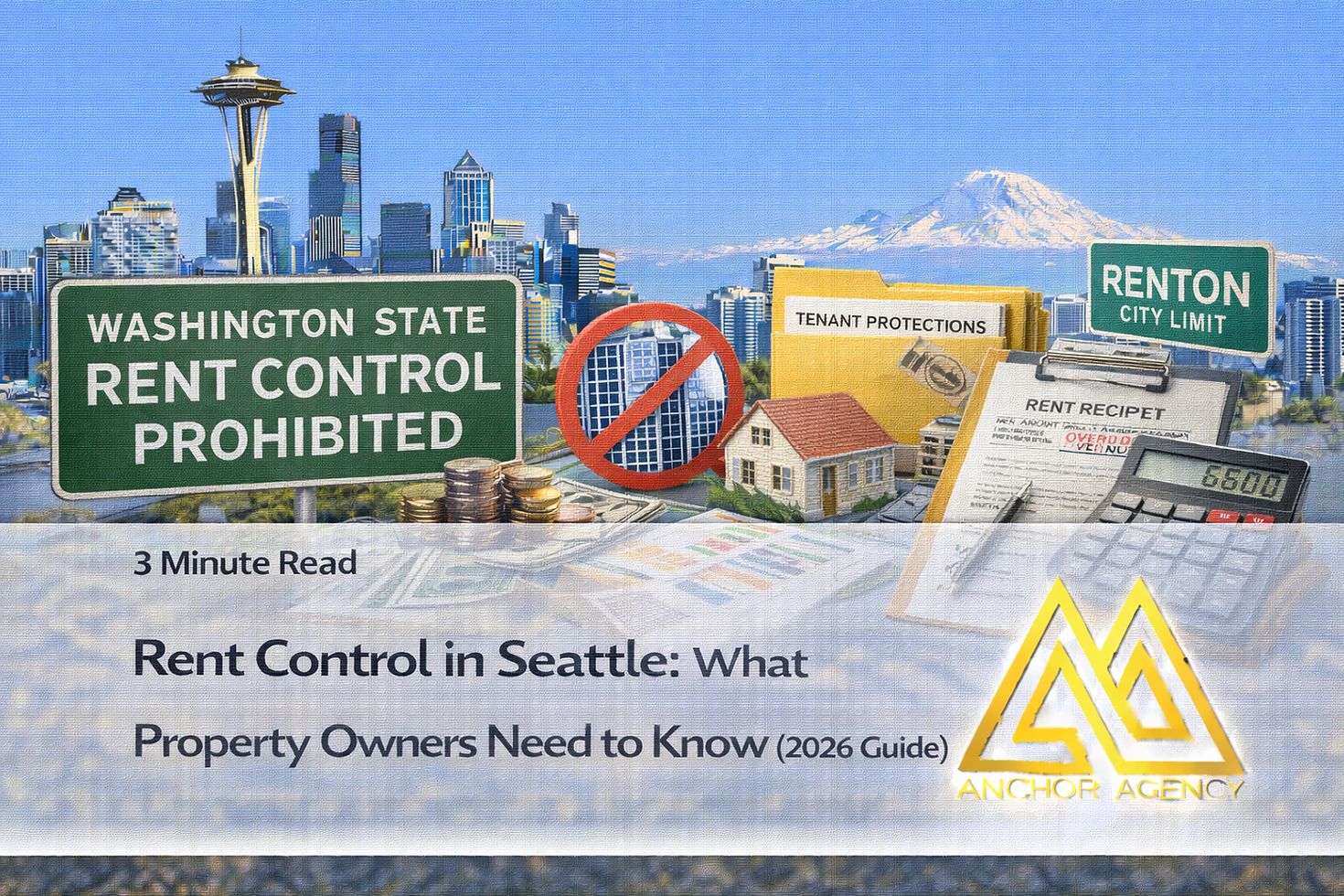
Rent Control in Seattle: What Property Owners Need to Know (2026 Guide)
3 Minute Read
Many rental property owners ask whether Seattle has rent control and how local regulations affect their ability to adjust rental pricing.
Understanding the current legal framework is important for landlords who want to remain compliant while managing rental property effectively.
At Anchor Agency, we work with property owners throughout Seattle, Renton, and King County to help manage rental properties while staying aligned with Washington State and local housing regulations.
Here is what property owners should understand about rent control in 2026.
Washington State and Rent Control
Washington State currently prohibits traditional rent control at the state level.
This means local cities, including Seattle and Renton, generally cannot impose strict limits on how much landlords can charge for rent.
However, while traditional rent control is not allowed, several regulations still affect how and when rent may be increased.
Property owners must understand these rules to avoid compliance issues.
Notice Requirements for Rent Increases
Although rent control is prohibited, Seattle has regulations regarding notice periods for rent increases.
Landlords must provide proper written notice before increasing rent.
The notice period allows tenants time to prepare for changes and provides transparency in rental adjustments.
Failure to provide proper notice can delay the implementation of a rent increase.
Tenant Protection Regulations
Seattle has implemented several tenant protection measures designed to provide stability for renters.
These may include rules related to:
Notice requirements
Tenant relocation assistance in certain situations
Lease termination procedures
Documentation standards for landlords
These protections are intended to balance tenant housing stability with property owner rights.
Market-Based Rental Pricing
Because Washington does not allow traditional rent control, rental pricing in Seattle and Renton is generally determined by market conditions.
Factors influencing rental pricing include:
Neighborhood demand
Employment growth
Property condition
Available housing inventory
Local economic trends
Landlords who monitor local market conditions can better position their properties competitively.
Why Strategic Pricing Matters
Even without rent control, raising rent too aggressively can increase vacancy risk.
Property owners should balance:
Market rent levels
Tenant retention
Property improvements
Operating costs
Strategic pricing helps maintain consistent occupancy and long-term investment performance.
How Professional Property Management Helps
Managing rental properties while staying compliant with local regulations can be complex.
Professional property management helps landlords stay informed about regulatory changes while optimizing rental performance.
Anchor Agency provides full-service property management across Seattle, Renton, and King County, assisting owners with:
Rental pricing analysis
Tenant screening
Lease management
Maintenance coordination
Financial reporting and performance monitoring
These systems help property owners maintain both compliance and profitability.
Final Thoughts
While Washington State does not allow traditional rent control, landlords in Seattle and Renton must still follow specific regulations regarding rent increases and tenant protections.
Understanding these rules helps property owners avoid legal issues while maintaining a successful rental strategy.
Property owners who stay informed about local housing regulations and market conditions are better positioned to protect their investments.
CTA
Need Help Managing Your Rental Property?
Anchor Agency provides full-service property management across Seattle, Renton, and King County. Contact us today to learn how professional property management can help simplify operations and improve long-term rental performance.
Comments